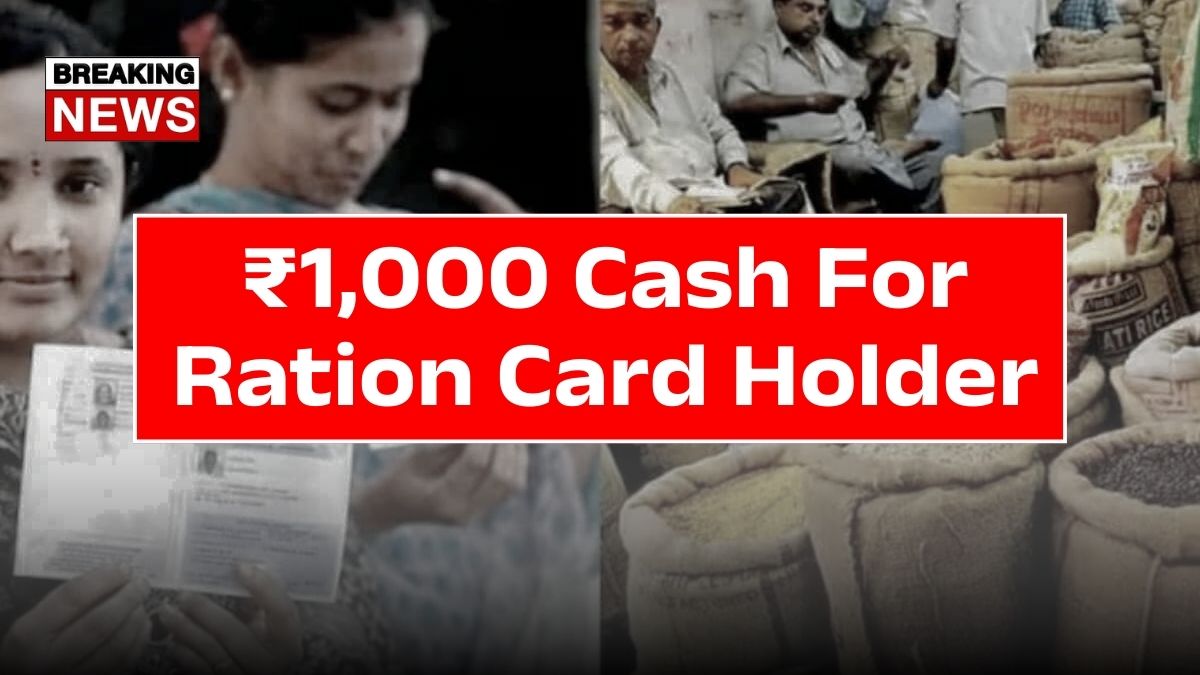
Ration Card 2026 Update : India’s ration card system has long been a lifeline for low-income families, helping them access subsidized food grains through fair price shops. In 2026, the system is getting a potential upgrade, with authorities exploring the idea of combining traditional food subsidies with a modest monthly cash transfer of ₹1,000 for eligible households. The move aims to give families more flexibility to manage expenses beyond basic food, especially in an era of rising prices for essentials like fuel, milk, and medicines.
Why a Hybrid Welfare Model Is Being Considered
For decades, ration cards have mainly ensured access to staples such as rice and wheat. While this has helped maintain nutrition security, it hasn’t addressed other day-to-day expenses. Policymakers are now exploring a hybrid approach that adds direct cash support to the existing food subsidy. The goal is to give households more control over spending, so they can manage school fees, transport, healthcare, and other necessities while still receiving their regular grain quota.
Eligibility Filters and Priority Categories
The proposed ₹1,000 support is likely to focus on Priority Household (PHH) and Antyodaya Anna Yojana (AAY) ration cardholders. Income, assets, and household composition may determine who qualifies. Families with high-value property or multiple vehicles are expected to be excluded. Within the eligible group, women-headed households, senior citizens living alone, and persons with disabilities may get preference. However, as with all welfare schemes, errors of inclusion or exclusion are possible, so grievance redress systems and proper verification will be key.

How the Direct Benefit Transfer May Work
If introduced, the cash support will likely flow through the Direct Benefit Transfer (DBT) system, which credits funds directly into beneficiaries’ bank accounts. This reduces the role of intermediaries, helps prevent leakage, and allows quick tracking of payments. Beneficiaries will need active bank accounts linked to their identity records. In areas with limited banking access, smooth delivery may depend on local administration readiness, so households may need to ensure all documentation is accurate and up to date.
Food Subsidy Continues Alongside Cash Support
Importantly, the cash transfer is not meant to replace the food subsidy. Eligible families would still receive their monthly grain quota, and in some states, pulses or fortified foods may also be included. The cash component is meant as an additional resource for items not covered under the Public Distribution System, like fuel, milk, medicines, or hygiene products. This dual approach is expected to make families more financially resilient while preserving the safety net that has long been part of India’s welfare system.
Ground-Level Benefits and Limitations
A predictable ₹1,000 monthly transfer could provide significant relief for low-income households. For example, an elderly couple depending on pensions could cover recurring expenses like medicines or electricity bills more comfortably. Unlike irregular one-time aid, a monthly cash transfer can help with consistent budgeting. That said, inflation may erode the real value over time, and different states may implement the scheme unevenly. Households with outdated documentation or inactive bank accounts may face delays, highlighting the importance of regular verification and proper record-keeping.

Steps Beneficiaries Should Take to Avoid Payment Issues
Families who might qualify should ensure their ration card and bank account details are accurate and up to date. Mismatched or incomplete information is a common cause for payment interruptions in DBT-linked schemes. Beneficiaries should check official portals or visit local ration offices periodically, especially after changes in family composition, address, or income. Keeping records accurate and up to date increases the likelihood of receiving payments smoothly and avoiding unnecessary delays or suspensions.
State-Level Implementation May Vary
It’s important to note that actual rollout will depend on state policies and administrative readiness. Some states may start the program quickly, while others may take longer due to verification or digital infrastructure challenges. Households should track announcements from their state food department and local authorities to stay informed about eligibility, timelines, and disbursement processes. Proactive monitoring can ensure families don’t miss out due to procedural delays.
Why This Could Be a Game-Changer
By combining in-kind food support with monthly cash assistance, the proposed model addresses both immediate nutritional needs and flexible financial requirements. It recognizes that families often spend beyond food for essentials like fuel, healthcare, education, and hygiene. If implemented effectively, it could make a real difference in household stability, reduce financial stress, and improve the overall welfare of the most vulnerable groups.

Final Thoughts
The proposed ₹1,000 monthly support under Ration Card 2026 is an important step toward a more responsive and flexible welfare system. While grain distribution will continue, the cash component provides additional flexibility for everyday expenses. Families should stay informed, maintain accurate records, and regularly verify their eligibility. Coordination between central and state authorities will determine the scheme’s effectiveness, but proactive preparation by beneficiaries can help them make the most of this potential support.
Disclaimer: This article is intended for general informational purposes based on policy discussions and reports available as of 2026. The ₹1,000 monthly support scheme has not been uniformly implemented across India, and actual eligibility, timelines, and amounts may vary by state and official notification. Readers should always verify information through authorized government sources, state food department portals, or local ration offices before making any decisions or assumptions about benefits.