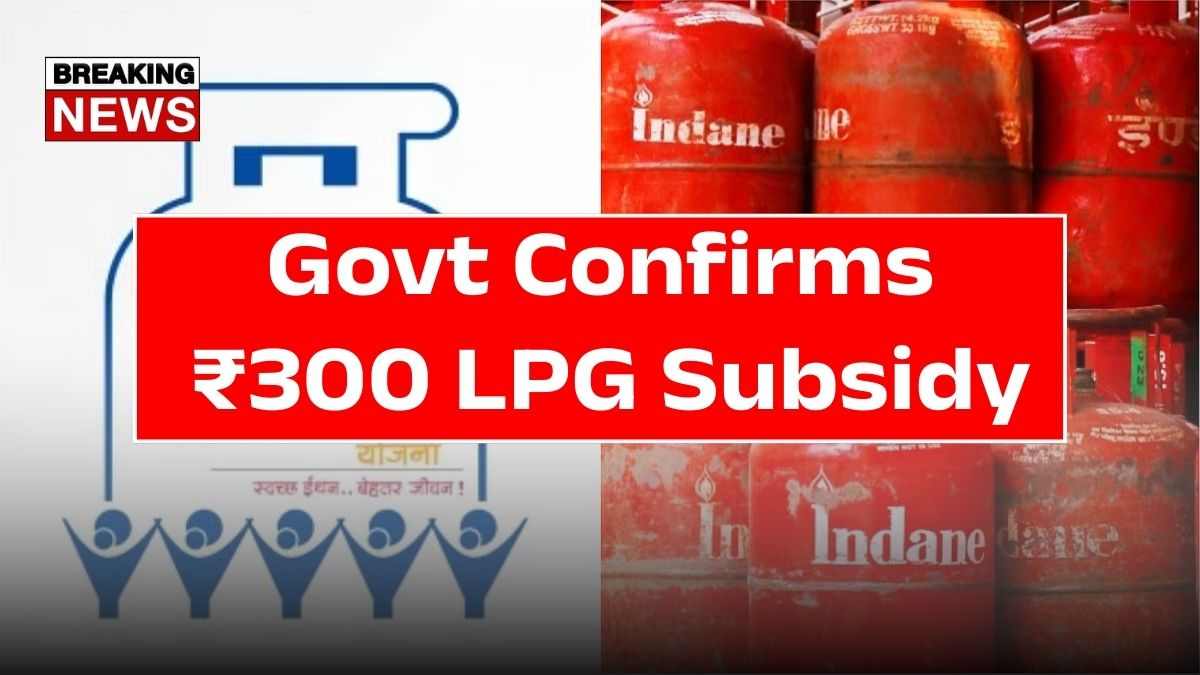
LPG Subsidy 2026 : In 2026, the government’s decision to continue offering up to ₹300 subsidy per LPG cylinder has come as a welcome relief for many families across India. Cooking gas prices are closely linked to global energy markets, and whenever international rates go up, household budgets feel the pressure. For low-income and rural families especially, even a small rise in fuel prices can disrupt monthly planning. That’s why this subsidy is being seen not just as a temporary benefit, but as an important support system to keep essential cooking fuel affordable.
Over the past decade, India has made major progress in shifting households from traditional fuels like firewood and coal to cleaner LPG connections. Schemes such as the Pradhan Mantri Ujjwala Yojana (PMUY) helped millions of families, especially women, get access to LPG for the first time. However, getting a connection is only the first step. Continued affordability is what ensures that families keep using LPG instead of going back to smoky chulhas. The ₹300 per cylinder relief plays a key role in maintaining this transition.
Why Subsidised LPG Remains Important for Families
For many households, LPG is not a luxury — it is their main cooking fuel. When cylinder prices rise sharply, families often try to stretch usage or switch back to cheaper alternatives like wood or coal. These options may cost less upfront, but they come with hidden costs such as health problems and time spent collecting fuel. A ₹300 reduction per cylinder can make a noticeable difference. For a family using around 10 to 12 cylinders a year, the total annual savings can add up to ₹3,000 to ₹3,600, which is significant for low-income households.

Stable cooking fuel costs also help families manage other essential expenses like groceries, school fees, electricity bills, and healthcare. In rural areas, where incomes may be seasonal or irregular, predictable LPG costs provide some financial stability. Experts often say that subsidies like this act as a safety cushion, especially during times of inflation.
Focus on Ujjwala and Low-Income Households
The main beneficiaries of this subsidy are families enrolled under welfare schemes, particularly those who received LPG connections through PMUY. These households were earlier dependent on traditional biomass fuels, so ensuring they continue using LPG is crucial. Eligibility is generally linked to income limits, Aadhaar verification, and having an active LPG connection registered in the household’s name.
Middle- and high-income families usually do not receive this benefit. The idea is to keep the support targeted so that government funds reach those who genuinely need assistance. In some cases, state governments may also provide additional support depending on local policies. Therefore, eligibility can vary slightly based on location and documentation status.

How the Direct Benefit Transfer (DBT) System Works
The LPG subsidy is credited through the Direct Benefit Transfer (DBT) system. This means that consumers typically pay the full market price when they book or receive a cylinder, and the subsidy amount is transferred directly to their linked bank account afterward. This process helps reduce misuse and ensures transparency.
Earlier systems sometimes faced issues like duplicate connections or middlemen interference. With Aadhaar linkage, bank verification, and digital LPG IDs, the process has become more streamlined. Consumers can track their subsidy status online through official LPG distributor portals or mobile apps. This digital tracking reduces fraud and ensures the right person receives the benefit.
Health and Environmental Benefits
The benefits of subsidised LPG go beyond saving money. One of the biggest advantages is improved health. Traditional cooking fuels produce thick smoke that can cause respiratory diseases, eye irritation, and long-term lung problems. Women and children, who spend more time indoors, are especially vulnerable. Studies over the years have shown that switching to LPG significantly reduces indoor air pollution and related illnesses.
Environmental gains are also important. Reduced use of firewood helps prevent local deforestation. Cleaner fuel also lowers household carbon emissions. In many rural communities, women and young girls spend hours collecting wood. With LPG, that time can be used for education, small businesses, or other productive activities. Continued affordability is essential; otherwise, families may return to mixed fuel usage, reducing these positive impacts.
Economic Impact at the Local Level
When families save money on cooking gas, that money often gets spent elsewhere in the local economy. It may go toward buying better food, school supplies, medicines, or household repairs. In small towns and villages, this spending supports local shopkeepers and service providers. Economists sometimes describe such subsidies as “micro-stimulus” because they boost consumption directly at the household level.
For example, in a farming family where income depends on crop cycles, stable LPG prices during low-income months prevent the need for borrowing money at high interest. This financial stability supports better nutrition and consistent school attendance for children. However, experts also point out that subsidies alone cannot solve deeper income inequality issues. They work best alongside employment schemes and rural development programs.

Important Clarifications and Limitations
It is important to understand that the ₹300 subsidy is not automatically applied to every single cylinder for every citizen. The actual amount credited may depend on eligibility criteria, income status, and government policy updates. Some families may receive a lower amount or none at all if they do not meet the required conditions.
Another factor to consider is global energy price volatility. If international fuel prices rise sharply, even after subsidy, the cylinder cost may still feel expensive for some households. Policymakers continue to explore long-term solutions such as diversifying energy sources and improving supply chains. Therefore, while the subsidy provides relief, it is part of a broader energy affordability strategy.
How to Check LPG Subsidy Status
Consumers can easily check whether their subsidy has been credited. The first step is visiting the official website or mobile app of their LPG distributor. By entering their LPG ID, registered mobile number, or Aadhaar details, users can see booking history and subsidy transfer records. Bank passbooks and digital banking apps also show DBT credits, usually within a few days after cylinder delivery.
If there is a delay or discrepancy, customers can contact their local LPG distributor or customer care helpline. Keeping KYC details updated — including bank account, Aadhaar, and mobile number — helps avoid interruptions in subsidy payments. For elderly consumers or those without internet access, local gas agencies remain an important support point.
The Bigger Picture
The continuation of the LPG subsidy in 2026 reflects the government’s attempt to balance fiscal responsibility with social welfare. Clean cooking fuel access is not just about comfort; it is connected to public health, women’s empowerment, environmental protection, and economic stability. By maintaining targeted support for vulnerable households, policymakers aim to prevent a rollback in the gains achieved through clean fuel adoption.
For many families, the ₹300 per cylinder relief may not seem huge in isolation, but over a year it creates meaningful financial breathing room. As energy markets remain unpredictable, such targeted measures can help protect household budgets from sudden shocks.
Disclaimer: This article is intended for general informational purposes only and is based on publicly available reports, policy discussions, and official scheme guidelines available at the time of writing. Subsidy amounts, eligibility rules, and implementation processes may change depending on government decisions, fiscal policies, and regional regulations. Readers are strongly advised to confirm their eligibility and subsidy status through authorised LPG distributors, official government portals, or verified notifications before making any financial plans or assumptions. Benefits are subject to proper documentation and compliance with scheme conditions.